
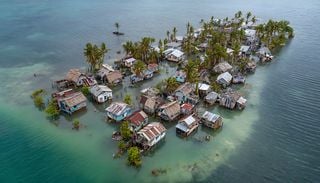
Climate change is forcing entire communities to flee, but simply relocating them is not enough. We examine the hidden costs of forced displacement and why resettlement is not just about building homes, it’s about rebuilding lives.

Marina Fernandez has a solid background in natural sciences, which allows her to understand the physical processes that occur in the atmosphere, and the complexity of the interactions with the rest of the environment.
She studied a degree in Atmospheric Sciences at the Faculty of Exact and Natural Sciences (DCAO-FCEN) of the University of Buenos Aires. She complemented her studies with the Environmental Management course in the postgraduate area of the Master's Degree in Environmental Engineering, at the National Technological University, and with several short courses such as Specialisation in Spectroscopic Techniques for the Measurement of Atmospheric Pollutants, at CITEDEF.
She actively collaborated with projects and publications in different research areas, under the direction of outstanding professionals at CONICET.
She actively participated in the area of scientific dissemination within and outside her faculty. She was an educational guide, in events organised by the Ministry of Science, Technology and Productive Innovation (MINCyT) and the Max Planck Society of Germany.
She was part of the Argentine National Meteorological Service until 2011, for the Environmental Monitoring Program of the Uruguay River.
She currently works as a meteorologist (weather forecaster and columnist on natural phenomena) for Todo Noticias (TN), one of the most prominent news channels in Argentina.
Climate change is forcing entire communities to flee, but simply relocating them is not enough. We examine the hidden costs of forced displacement and why resettlement is not just about building homes, it’s about rebuilding lives.
As human activity expands and extreme weather intensifies, nature is responding with astonishing speed. Discover how a range of animal species are rewriting the rules of evolution in just a few decades to survive the Anthropocene.
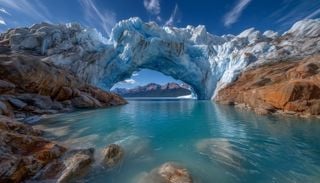
Exploring South America's towering glaciers is much more than a hike. These journeys promise breathtaking scenery, unforgettable adventure, and some of the most spectacular ice landscapes on Earth. Here are four unforgettable glacier experiences.
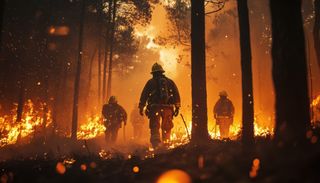
An unprecedented wildfire crisis has engulfed France, giving rise to an unexpected phenomenon: the explosion of historic ammunition. The wildfires triggered the detonation of deadly Second World War weaponry that had lain hidden beneath the ground for decades.
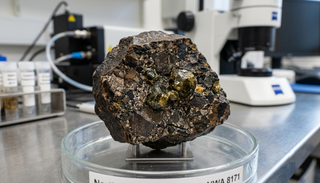
Hidden inside the 4.4-billion-year-old Martian meteorite Northwest Africa (NWA) 8171, an international team of scientists discovered a gemstone, the first extraterrestrial "garnet" gem ever identified.
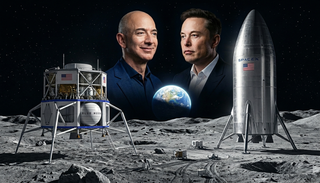
NASA has delegated the next Moon landing to private companies. SpaceX and Blue Origin are accelerating the development of their spacecraft to secure the future of the Artemis program. Diego Córdova explains the details behind the new “battle for the Moon.”
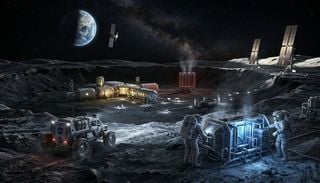
The success of a permanent base at the lunar South Pole depends on a technological race against extreme cold to store vital energy. NASA’s strategy lies between nuclear fission and subzero lithium.
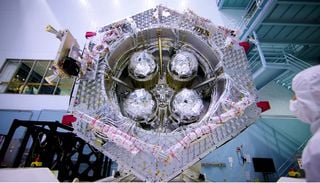
Roman is the new telescope recently presented by NASA. It is capable of exploring vast regions of the universe in search of planets beyond our solar system, gathering information about dark energy and dark matter, and collecting other data.
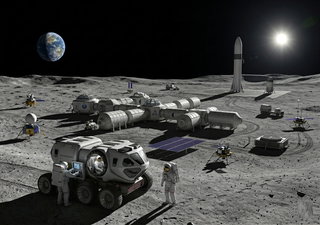
NASA's new plan is fascinating and revolutionary: to build bases on the Moon as the ultimate stepping stone to reach Mars, marking the beginning of an unprecedented era of space exploration.
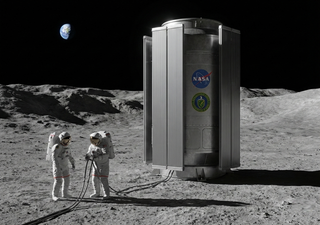
NASA and the U.S. Department of Energy plan to build a nuclear fission power plant on the Moon by 2030.
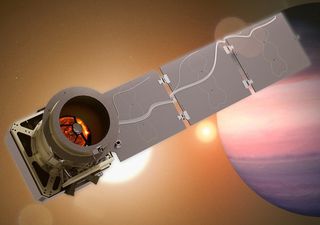
The mission was successfully launched this Sunday, January 11. NASA’s high-precision Pandora space telescope satellite will make it possible to study exoplanets and search for life beyond the solar system.
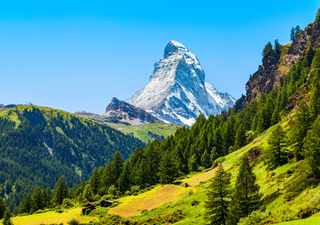
From Madeira’s Atlantic coast to the legendary Route 40, seven scenic routes reveal some of the most incredible landscapes in the world, ideal for traveling and connecting with nature.
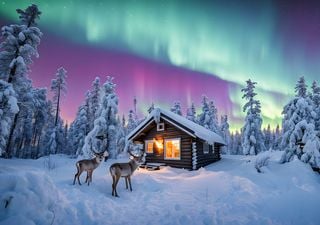
A journey through seven unforgettable trips to experience a Christmas full of lights and snow, with destinations where nature, winter weather, and local traditions come together in perfect experiences to enjoy with the family.
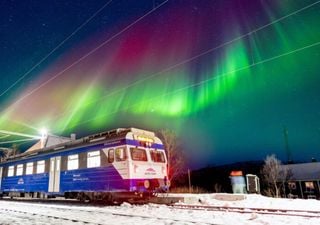
The combination of train, arctic landscapes and dark skies makes this unique night journey one of those experiences that, honestly, is worth experiencing at least once in a lifetime.
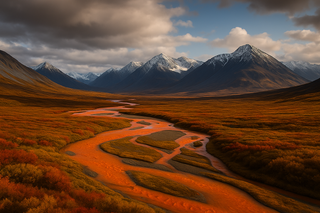
In Alaska, rivers are turning bright orange, a surprising phenomenon that has alarmed scientists who already have a theory that could explain this oxidation.
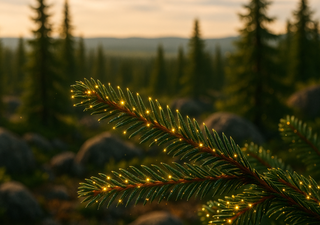
Gold particles seem to "sprout" from this mysterious tree in Finland. It's not magic, it's science — the key lies in the endophytic bacteria inside the needles of the Norway spruce. A new step toward deposit detection techniques.
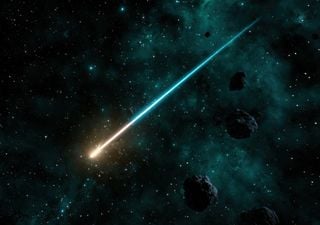
We've provided a complete guide with observation instructions from experts, so you can decide if what you saw in the sky and marveled at was a shooting star, space debris, a comet, or something else...

The first 3D printing of a metal “S” on the International Space Station is the starting point for a change in the future of space exploration.
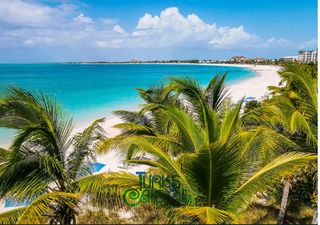
A place of immense beauty and ecological importance within the Caribbean, the Turks and Caicos Islands are much more than white sandy beaches. They form an open-air laboratory with priceless ecosystems, which we are about to discover.
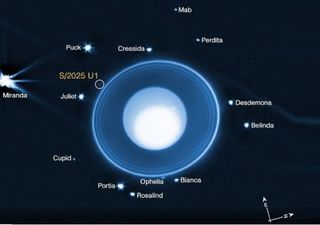
The incredible James Webb Space Telescope surprises us every day. This powerful tool has just detected Uranus’ 29th moon, expanding the family in the solar system.