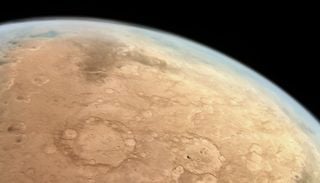
The atmosphere of Mars is very different from that of Earth. It is rich in CO2, strong winds blow and huge dust storms form that cover much of the Red Planet.

The atmosphere of Mars is very different from that of Earth. It is rich in CO2, strong winds blow and huge dust storms form that cover much of the Red Planet.
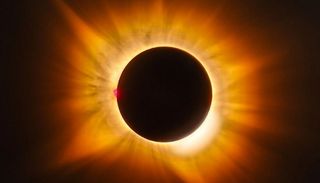
The August 12 solar eclipse produced an unusual sight: the corona took on a golden hue over Spain due to the Sun’s position and wildfire smoke.
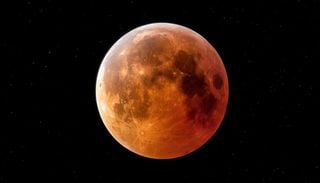
A near-total lunar eclipse will sweep over much of the world, including North America, later this week. The dramatic, colorful event requires minimal to no travel for most, and zero equipment to behold.
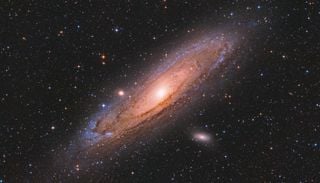
Andromeda is slowing its rate of star formation. Hubble reconstructed 500 million years of its history and found a significant decline, with M32 as a possible cause of the observed local disturbances.
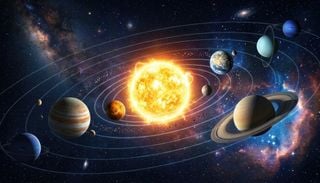
The answer lies not in the distance from the Sun, but in the atmosphere. A runaway greenhouse effect turned Venus into an oven capable of reaching temperatures higher than Mercury’s.
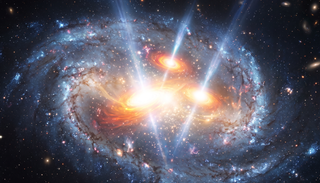
The discovery reveals three active supermassive black holes in the galaxy J0148-4214 that accumulate matter through surrounding accretion disks. This system could help scientists understand how black holes and galaxies evolve together.
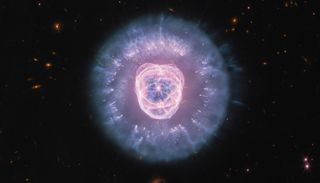
The James Webb Space Telescope observed the Lion Nebula again, revealing structures of dust and ionized gas that provide a better understanding of the final chapters in a star’s life.
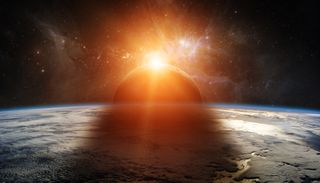
From ancient times to today, eclipses have gone from being seen as omens to becoming scientific laboratories. These five marked turning points in history: they helped explain the sky, led to the discovery of elements, and put Einstein’s theory to the test.
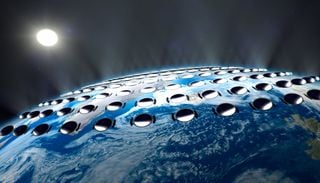
Reflect Orbital aims to capture sunlight on demand with satellite and ground-based technology. A new preprint study suggests the satellite-based mirrors could light up the night sky significantly more than intended.
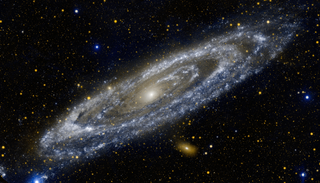
Observations from the Euclid telescope are helping astronomers understand how the spiral arms of galaxies form and evolve.
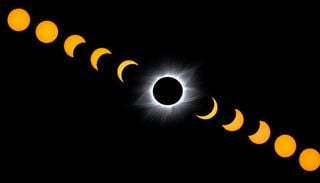
Eclipse prediction makes it possible to determine with great precision when the Sun, Moon, and Earth will align and which areas will be able to observe the phenomenon.
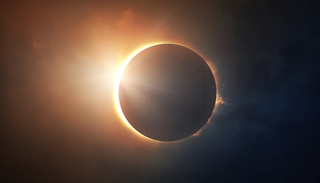
During the total solar eclipse on August 12, the sky won’t be the only thing that darkens: the way your eyes perceive the world will also change. Why will reds appear darker while greens seem to glow?