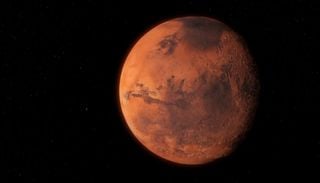
Curiosity found preserved cracks in ancient Martian rocks that reveal cycles of wetting and drying. Their geometry will help us reconstruct past environments and determine if rainy seasons existed.

Curiosity found preserved cracks in ancient Martian rocks that reveal cycles of wetting and drying. Their geometry will help us reconstruct past environments and determine if rainy seasons existed.
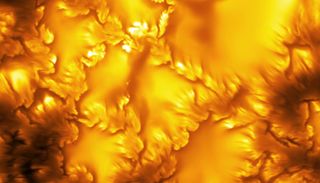
New observations of the Sun’s turbulent surface reveal tiny spiral structures that could help explain why its outer atmosphere is millions of degrees hotter than its surface.
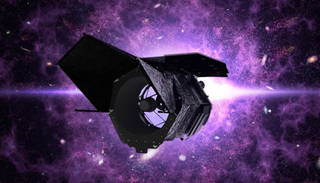
The Nancy Grace Roman Space Telescope begins a mission designed to map the cosmos, investigate dark energy and dark matter, and expand the catalog of exoplanets.
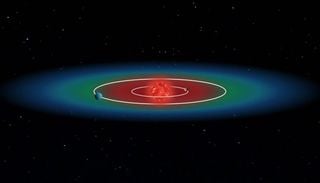
At 337 light-years away, a red dwarf star hosts two contrasting planets: one scorching hot and possibly covered in lava, and another temperate world located within its host star’s habitable zone.
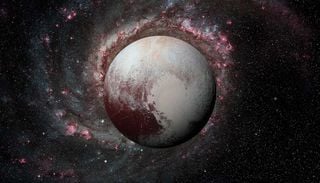
Pluto takes 248 years to complete one orbit around the Sun, and in 2178 it will return to the point it occupied when it was discovered in 1930.
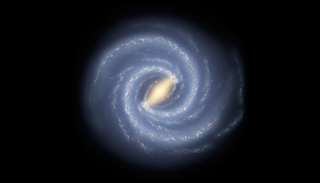
A new study seeks to explain the origin of structures recently observed at the center of the Milky Way and other galaxies.
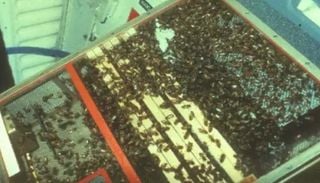
In 1984, a colony of bees traveled aboard the space shuttle Challenger to study how weightlessness affected their behavior and honeycomb construction.
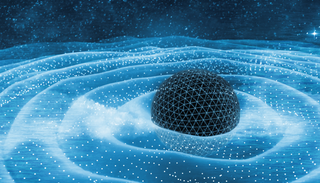
According to this hypothesis, dark energy could be a natural effect of quantum gravity acting on the geometry of spacetime itself.
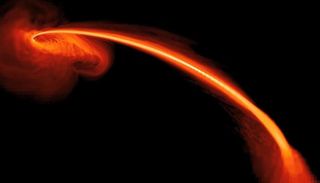
Some stars survive being pulled close to supermassive black holes, but their repeated bursts of light get weaker. New research suggests the star’s spin could explain why.
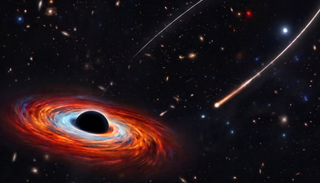
The fastest star in the Milky Way reaches 25,000 km/s and could reveal how the central black hole spins.
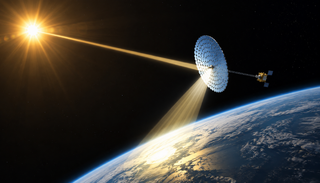
The future project by Reflect Orbital could pose a risk to our health, while also having potentially significant consequences for our night sky.
Is it possible that other universes exist beyond our own? What do we know about matter and antimatter? For centuries, scientists have tried to unravel the secrets of the cosmos. Yet there is still so much left to discover.