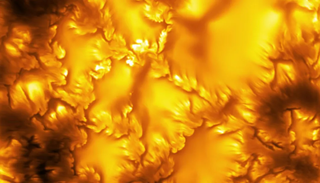
Unprecedented images captured by the world's most powerful solar telescope reveal magnetic vortices on the Sun's surface, helping scientists explain the origins of space weather and its effects on Earth.

Unprecedented images captured by the world's most powerful solar telescope reveal magnetic vortices on the Sun's surface, helping scientists explain the origins of space weather and its effects on Earth.
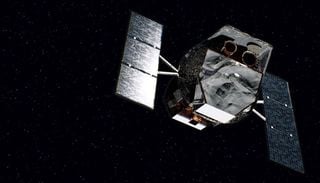
The spacecraft tasked with raising the orbit of the Swift observatory has lost stability. Engineers are working to regain control as time runs out to save this historic NASA science mission.
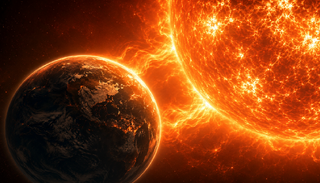
New models suggest that Earth may avoid being swallowed by the Sun as it expands into a red giant. Life, however, will disappear long before then, leaving the planet as a barren world orbiting a white dwarf.
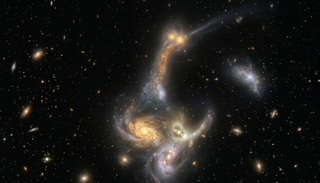
This compact group of six galaxies, observed in the early universe, may represent an early stage in the formation of a giant elliptical galaxy.
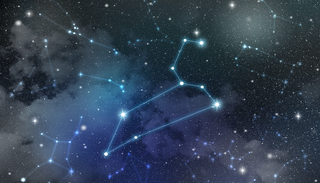
Today, the constellation Leo takes center stage. Let's explore this zodiac constellation: beyond its mythological origins, it is home to stars such as Regulus and Algieba, as well as galaxies, exoplanets and the spectacular Leonid meteor shower.
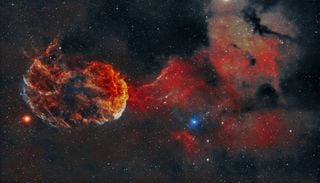
A team of scientists has identified the first known candidate binary star system in which both stars have undergone supernova explosions—a discovery that could expand our understanding of how binary star systems form and evolve.
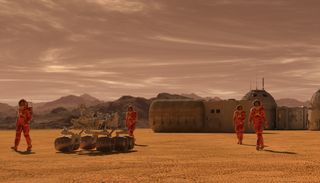
The U.S. space agency has opened applications for a 14-month mission. The goal isn't to study Mars, but to understand how the human body and mind respond to prolonged isolation.
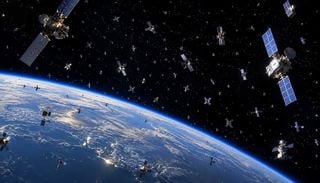
Nearly 16,000 satellites already orbit Earth, and that number could reach between 60,000 and 100,000 before the end of the decade. Keeping them operational will be the biggest challenge.
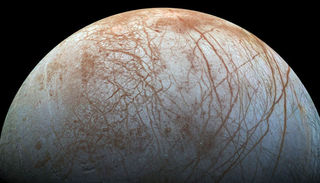
Considered one of the most promising places in the Solar System in the search for extraterrestrial life, Europa may conceal an ocean that is far more difficult to access than previously thought.
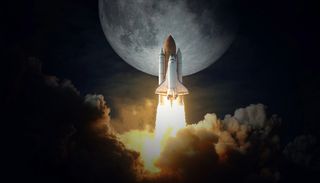
A new study suggests exhaust from lunar landers could spread across the Moon, raising concerns that future missions may disturb frozen clues preserved for billions of years at the poles.
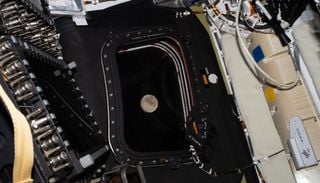
Artemis II returned astronauts to the vicinity of the Moon, but the mission also encountered unexpected anomalies that tested the crew's training, patience and coordination throughout the journey.

In response to the numerous satellite megaconstellation projects orbiting Earth, the European Southern Observatory has requested the establishment of a limit to preserve astronomical observations from the surface of our planet.