
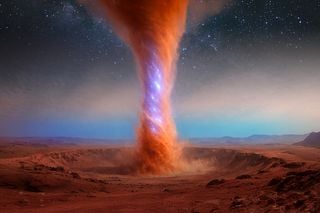
A group of researchers has detected the signal of a “whistler” in a one second snapshot captured by the MAVEN probe orbiting Mars, which could be linked to the presence of lightning.

A group of researchers has detected the signal of a “whistler” in a one second snapshot captured by the MAVEN probe orbiting Mars, which could be linked to the presence of lightning.
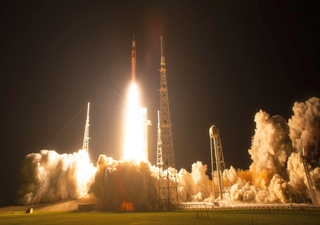
The meteorological conditions for transporting the rocket to the launch site and for the launch itself are extremely strict, ensuring flight safety in both weather conditions and space weather.
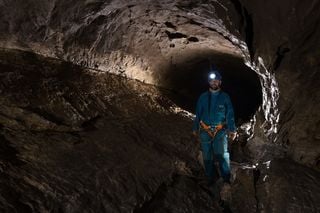
Scientists aim to model and characterize underground cave systems around the world in order to predict water flow and the transport of contaminants.
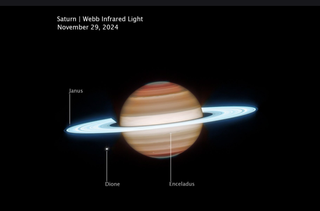
The James Webb Space Telescope and the Hubble Space Telescope have joined forces to capture new images of Saturn, revealing the planet in surprisingly different ways.

Researchers at the University of Waterloo have discovered a way to convert plastic waste into acetic acid, the main component of vinegar, using sunlight.
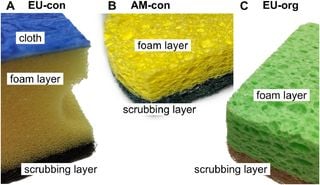
Kitchen sponges are among the most commonly used household items and may represent an underestimated source of microplastics.
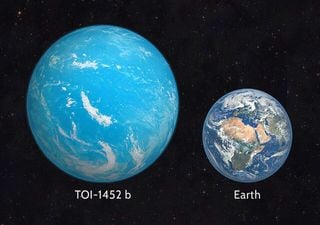
TOI-1452 b is an exoplanet around 70 percent larger than Earth and is considered a strong candidate for an ocean world. Scientists suggest that its oceans could reach depths of hundreds of kilometres.
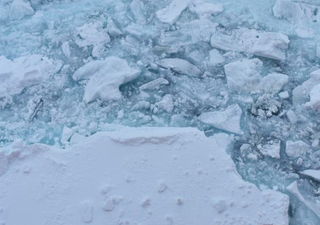
Sea ice around Antarctica expanded for several decades until a sharp decline occurred in 2015. The reasons behind this change are revealed in research by the University of Gothenburg.

Tiny forms of life embedded in debris blasted from a planet by an asteroid impact could travel through space and arrive on another world still alive, according to new experiments by researchers at Johns Hopkins University.
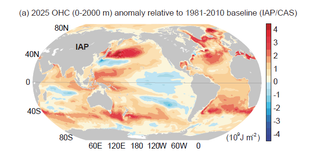
Despite the La Niña phenomenon, global ocean warming continued in 2025 due to rising concentrations of greenhouse gases, with ocean heat content reaching record levels, particularly in the Mediterranean.

A team of scientists has published a new peer-reviewed study examining regional snow cover trends in the Northern Hemisphere. The results suggest a clear decrease in snow coverage, as well as seasonal shifts in the timing of when the winter layer appears and melts.
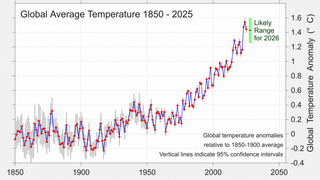
According to the National Oceanic and Atmospheric Administration and other specialised agencies, an El Niño event could develop later in 2026, potentially pushing global temperatures to record levels in 2026 and especially in 2027.
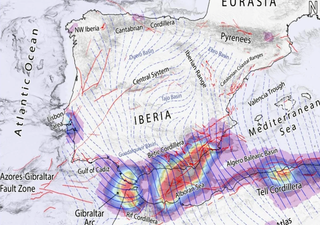
A new geophysical model integrating velocity data and seismic focal mechanisms reveals that the Iberian Peninsula is slowly rotating clockwise relative to Eurasia and Africa, according to a new study.
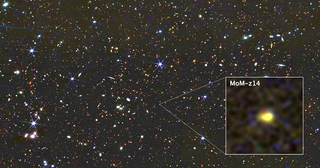
NASA’s James Webb Space Telescope has confirmed one of the earliest bright galaxies yet, MoM-z14, and researchers say it’s adding fresh tension between what models predicted and what Webb keeps finding
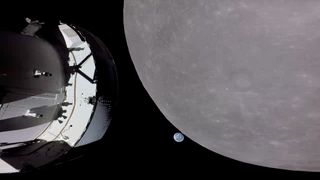
Our planet is setting behind the Moon’s bright limb as the photograph is captured by an external camera aboard the Orion spacecraft.
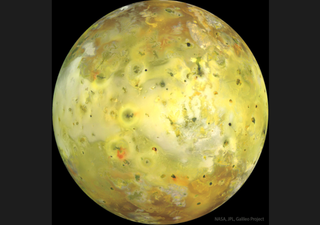
Jupiter’s moons are full of weird surprises, but one of them has stood out for years. A 'true colour' view and a few brutal stats explain why Io keeps stealing the spotlight.
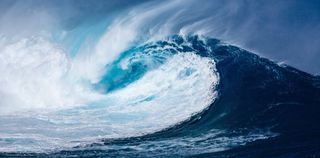
Climate change has many culprits, from agriculture to transport and energy production. Now, another factor can be added to the list: the salty masses of the deep ocean.
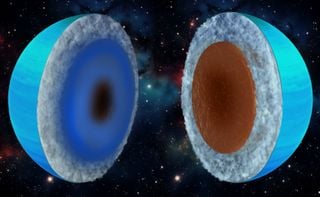
A group of researchers is reviewing our understanding of the interiors of the outermost planets in the solar system: Uranus and Neptune. Are they icy planets (as commonly believed), rocky, or do they have a mixed structure?
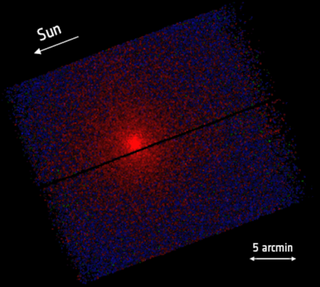
The European Space Agency (ESA) has achieved a new scientific feat by detecting X-ray emissions coming from the interstellar comet 3I/ATLAS, a visitor crossing the solar system from beyond its boundaries.
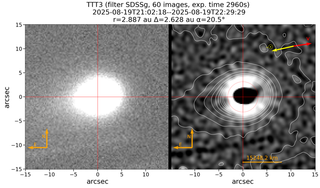
Astronomers have detected a narrow jet of material emerging from the sunlit side of interstellar comet 3I/ATLAS, behaving differently from its dust tail and revealing new clues about how the comet rotates