
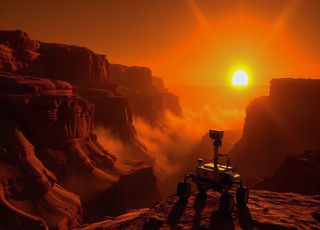
Due to a lack of funding, NASA will unfortunately have to set aside the mission aimed at collecting soil samples from the planet Mars.

Due to a lack of funding, NASA will unfortunately have to set aside the mission aimed at collecting soil samples from the planet Mars.
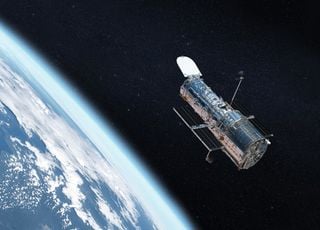
The Hubble telescope is expected to fall toward Earth’s surface in the coming years, making it important to know where and when this will happen.
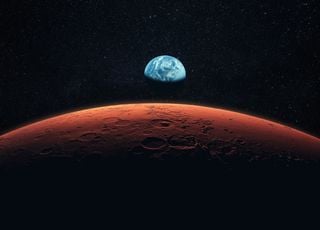
Some of Earth’s climate cycles are directly dependent on the orbital parameters of the planet Mars, particularly its mass, according to a recent scientific study.
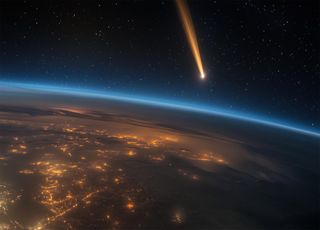
Although not as impressive as Comet Lemmon, several comets will become visible again from Earth in the coming months, especially with binoculars or a small, simple telescope.
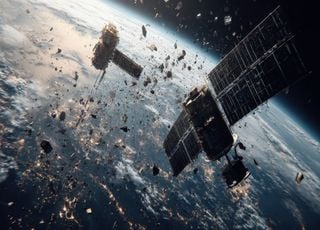
The number of satellites in low Earth orbit is becoming so large that a single collision between these objects could trigger an uncontrollable chain reaction.
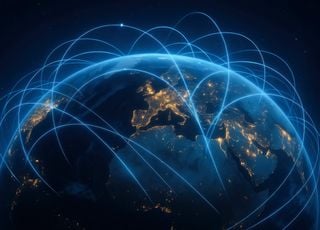
NASA recently issued a warning about the risks posed by the surge in satellites orbiting the planet. These satellites are expected to greatly affect the images captured by certain telescopes in the future.
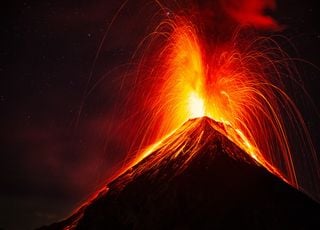
A massive eruption occurred this weekend on the Hayli Gubbi volcano in Ethiopia, a first in the Holocene history for this volcanic edifice.
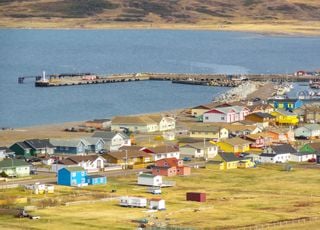
The village of Miquelon is situated only two metres above sea level. It is the first French village to relocate due to the climate threat.
What would happen if the cosmological constant, which is currently positive, became negative? Based on this theory, a team of researchers has managed to model the end of our Universe.
Co-Venusian asteroids, still poorly studied and poorly understood, are believed to be lurking in the orbit of Venus and could pose a significant danger to our planet.
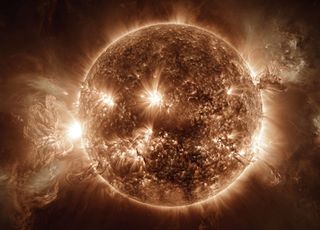
While scientists thought our star was going to enter an especially quiet phase, solar activity, on the contrary, has been steadily increasing for about 15 years.
In early July, several astronomers detected successive, particularly virulent gamma-ray bursts. This phenomenon surprised scientists.
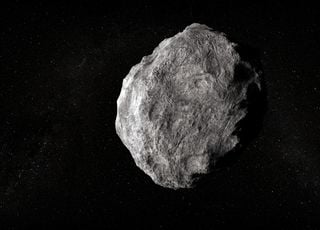
Astronomers have discovered a 300-km-diameter object in the outer reaches of our solar system. Its rather unusual orbit could call into question the existence of the famous Planet 9.
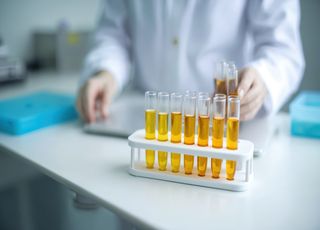
Human urine contains not only waste, but also important minerals that could be used to repair our bones and teeth. Eventually, we could even use our urine on a large scale!

As the heat is expected to become scorching in France in the coming days, it is important to know some tips to help our pets feel better when the temperatures become too high.
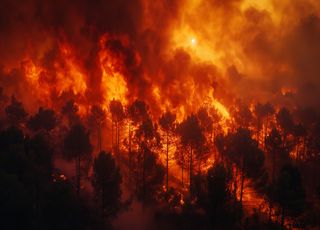
Entire villages have been evacuated in recent days amid the threat of massive wildfires raging across western and central Canada. Millions of hectares of vegetation have also gone up in smoke, particularly since last month.
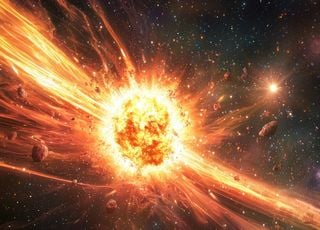
Supernovae send astronomical amounts of energy into space. If this energy were to reach Earth, the consequences could be disastrous. According to Spanish researchers, this event could have already occurred in the very distant past.
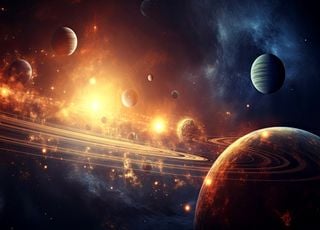
Regardless of their size, composition, or position in the Universe, all planets adopt a spherical shape, a phenomenon that can be explained "simply" by physics.

What if rain could one day become a renewable energy source? Thanks to an invention by researchers at the University of Singapore, this seems possible in the future.
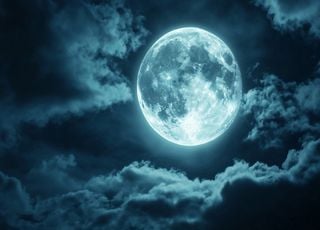
The Moon, our natural satellite, is one of the best-known celestial bodies in the solar system. Yet, since the dawn of time, we have only seen one side of it. How can this be explained?