

Using data from the James Webb Space Telescope, astronomers have discovered something unprecedented: a supermassive black hole that was expelled from the galaxy it inhabited.

Using data from the James Webb Space Telescope, astronomers have discovered something unprecedented: a supermassive black hole that was expelled from the galaxy it inhabited.
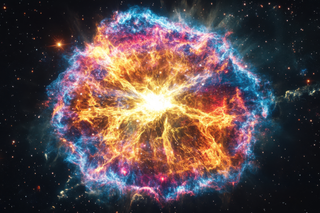
New data from the James Webb have shown a supernova that occurred when the universe was less than one billion years old.
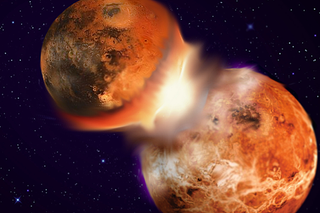
A new paper reveals fresh evidence about the collision that gave rise to the Moon and how Earth entered a collision course with Theia.
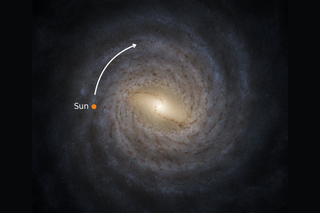
If the solar system is moving faster than we thought, some calculations will need to be redone because this could affect the values we currently have.
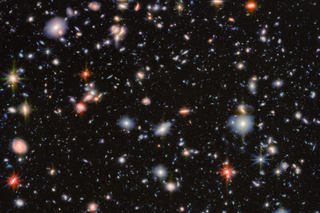
In a new study, astronomers argue that the Universe's peak is in the past and the trend is only going to get worse from here on out.
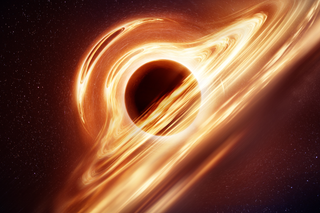
In a phenomenon where a black hole is consuming a star larger than the Sun, a peak in brightness occurred that amazed astronomers.
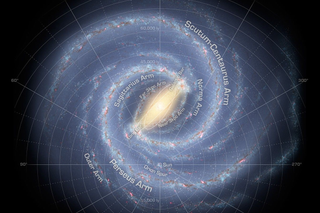
A NASA researcher argues in a new paper that the Milky Way likely hosts multiple civilisations, but we haven’t found them for a very simple reason.
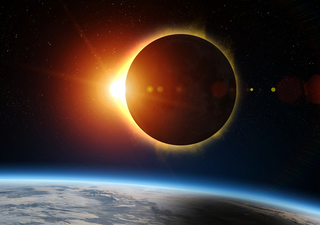
The greatest solar eclipse of the century will take place in 2027 and last more than 6 minutes. We’ll tell you when, where, and how this spectacular phenomenon can be observed.
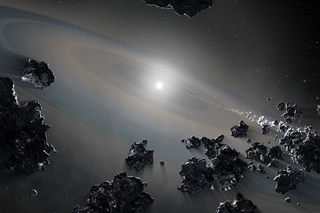
A rogue exoplanet is feeding on gas and dust at an astonishing rate and has been observed by ESO's Very Large Telescope (VLT).
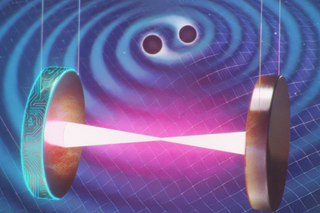
Google this week unveiled Deep Loop Shaping, which aims to facilitate and improve gravitational wave observations.
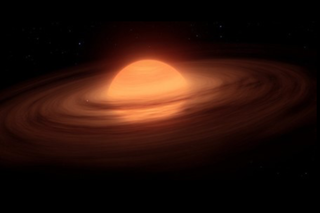
A new study shows that isolated planets and giants can create their own planetary systems far from their stars.
James Webb has recorded an event that could explain how supermassive black holes appeared in the universe.
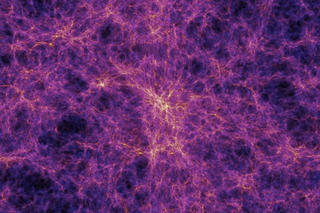
New study discusses observational results that argue the Milky Way is trapped in a cosmic void.

Mars has many similarities to Earth, but its habitability appears to be limited. Now, astronomers seem to know why.
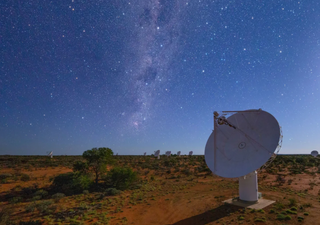
A group of astronomers has discovered an object that sends out X-ray and radio signals exactly every 44 minutes, a discovery that has been published in the journal Nature.

The observation of a high-speed gas cloud indicates the presence of a possible dark galaxy in the vicinity of the Milky Way.
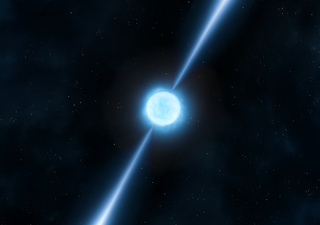
Flares from an object called a magnetar can produce a planet's worth of heavy elements, such as gold and platinum.
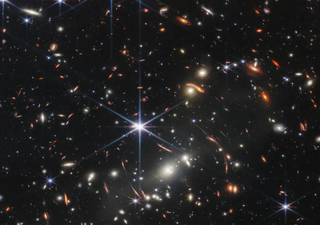
Oxygen atoms were found in a galaxy observed from a time when the universe was only 300 million years old.
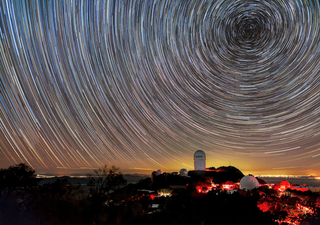
The DESI collaboration has released new results that indicate that dark energy may change throughout the history of the Universe.
For the first time, a group of physicists has managed to map in detail the interactions that take place inside a proton.