
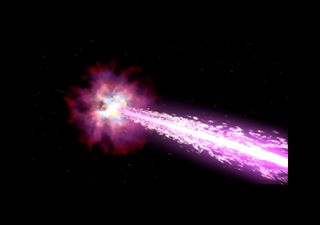
Astronomers believe they have observed a strange star forming and, if confirmed, it is the first observation of a star of its kind.

Astronomers believe they have observed a strange star forming and, if confirmed, it is the first observation of a star of its kind.
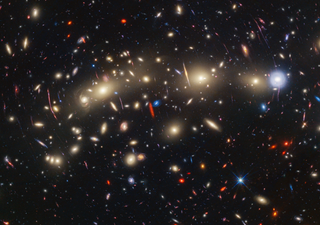
Astrophysicists and geobiologists argue in an article that life on Earth was not something rare to happen and could be common on other planets.
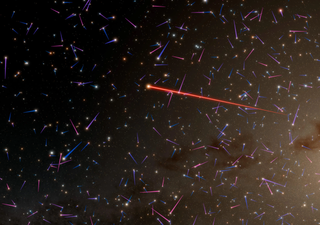
The exoplanet found is larger than Neptune and has a speed of almost 2 million kilometers per hour, breaking the record for the fastest exoplanet.
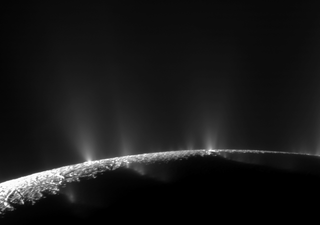
The asteroid Bennu, which is considered part of an object outside the solar system, has the ingredients for life to form.
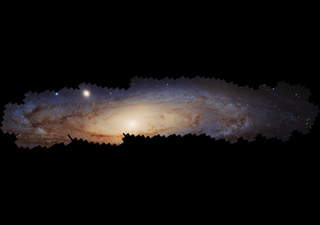
One of the largest images ever recorded of the Andromeda galaxy has 2.5 billion pixels and took 10 years to make.
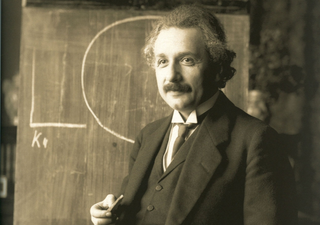
Many believe that Einstein's Nobel Prize was for the Theory of General Relativity, but the award was for another work.

Since OpenAI announced o3, the topic of AGI has been trending, but what is this term and why is it important?
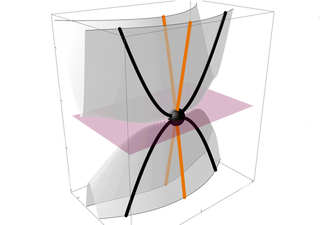
Physicists have observed that the mass of particles depends on the direction in which they move. Understand what this means.
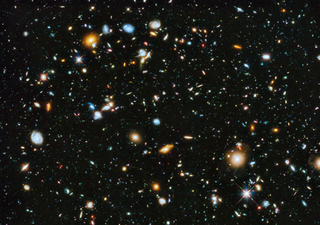
Astrophysicists from New Zealand have published a model of the Universe that does not require dark energy to explain expansion.
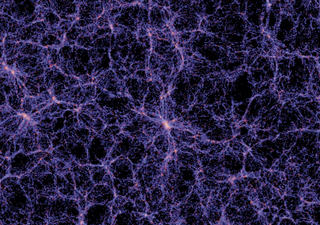
A broader cosmological simulation will be used to help researchers test models of the evolution of the Universe.
Equation describing the number of extraterrestrial civilisations that could be found has new term added.
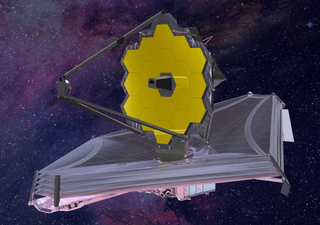
New calculation of the Hubble constant found by the James Webb Telescope confirms Hubble's prediction.
Data from the eRosita survey shows that there is a tunnel located in the vicinity of the Solar System to another constellation.
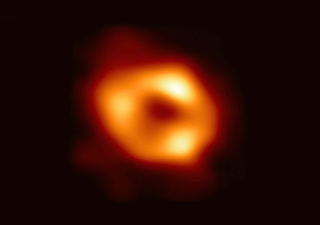
A group of Japanese astronomers re-analyzed the images of the black hole Sgr A* published in 2022 and drew different conclusions.
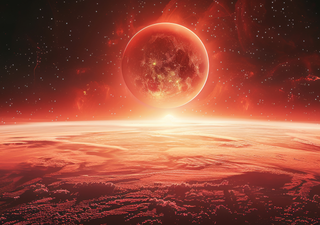
A problem that would threaten the existence of life has been found on exoplanets that were favourite candidates for finding life.
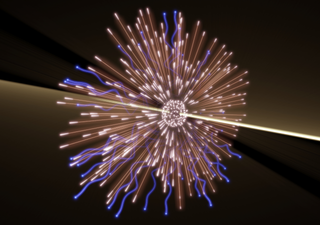
An extremely rare decay of a particle has been observed and puts physics' most successful model to the test.
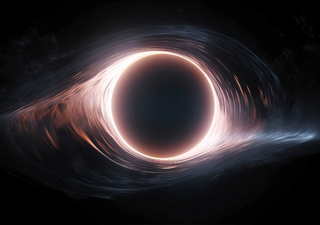
Physicist publishes an article where he argues that black holes are frozen stars, calling into question Einstein's theory.
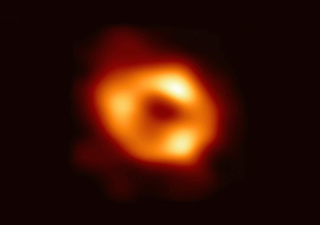
In new work, astronomers believe they have found the answer to the origin of the supermassive black hole in the center of the Milky Way
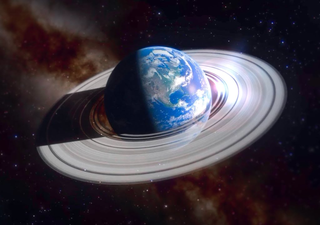
New study of craters on planet Earth suggests that the planet once had rings like Saturn in the distant past.
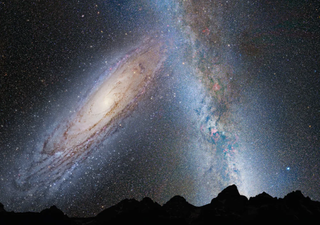
New observations suggest galaxies are larger than previously thought and Andromeda could already be touching the Milky Way.