
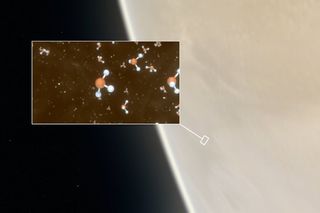
Despite its extreme temperatures and inhospitable surface, Venus holds fascinating secrets. Recent studies of its clouds suggest that life could find an unexpected refuge there

Despite its extreme temperatures and inhospitable surface, Venus holds fascinating secrets. Recent studies of its clouds suggest that life could find an unexpected refuge there
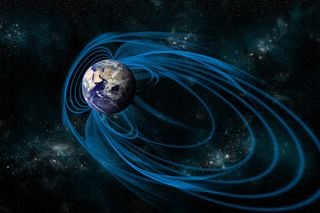
Around Earth, there is an invisible region where energetic particles are trapped by the magnetic field—a natural shield that is essential for life and space exploration.
Why doesn’t the night sky appear as a blanket of bright light? It all has to do with cosmic expansion and the finite lifetimes of the most distant stars.
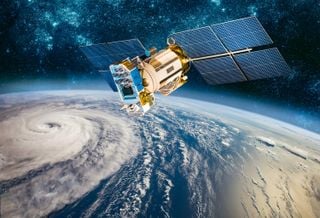
The Swarm mission reveals the existence of space hurricanes, enormous polar plasma vortices capable of disrupting satellite signals and generating intense geomagnetic disturbances during periods of apparent solar calm.

Durante siglos, contemplamos la oscuridad del firmamento nocturno, pero investigaciones recientes revelan que, si sumamos toda la luz estelar, el Universo posee un tono que nos recuerda a algo delicioso.
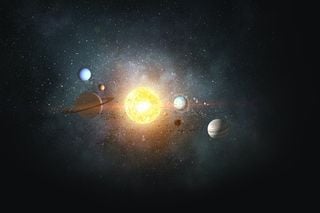
Is there a turtle holding four elephants on which the Earth rests? Or perhaps it is a huge Titan carrying the entire planet on his shoulders? Here we explain it.
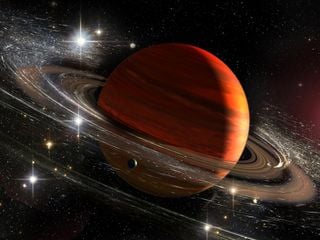
This 2026 will be an unforgettable year for observing the sky, highlighted by total eclipses, blood moons, and historic space missions that will allow us to connect deeply with the universe.
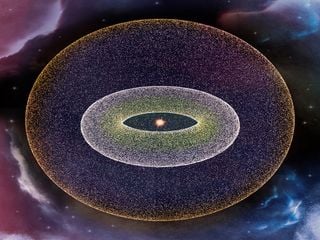
This theoretical spherical region, which envelops the entire Solar System at astonishing distances, is the vast reservoir of billions of long-period comets.
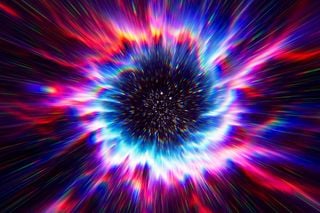
Recent research suggests that powerful stellar explosions bathe star systems in radioactive building blocks, allowing dry, rocky planets like Earth to be extremely common today.

ESA and DLR are seeking participants for SOLIS100 and SMC3 in Cologne, Germany, simulating isolation and the effects of weightlessness for future crewed missions to the Moon and Mars.
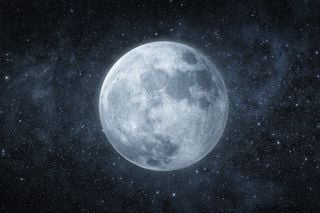
The Moon and its movements on its journey around Earth, explained to help you understand the lunar phases and why we see changes in the shadows on its face.
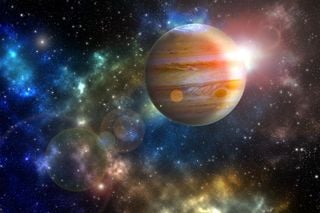
December 2025 brings wonderful celestial events with Jupiter as the star, including the Super Cold Moon and the spectacular Geminid and Ursid meteor showers, along with the Solstice.

The Large Hadron Collider (LHC), the world’s largest scientific instrument, recreates high-energy collisions to search for new fundamental particles, such as the mysterious Higgs boson.
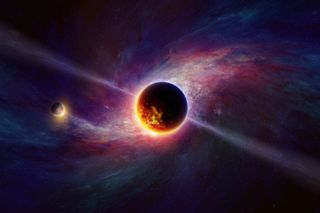
The first extrasolar coronal mass ejection from the red dwarf star StKM 1-1262 has been detected. This explosion raises questions about the habitability of exoplanets, as it could strip them of their atmospheres.

Science has a theory that is as terrifying as it is revealing: perhaps we haven't found extraterrestrials because all advanced civilisations self-destruct before they can expand. Is that our destiny?
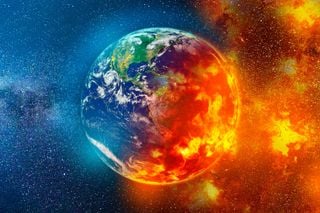
Our Sun, which today sustains life on Earth, also has an expected end in about 5 billion years; its evolution will turn it into a dying star.
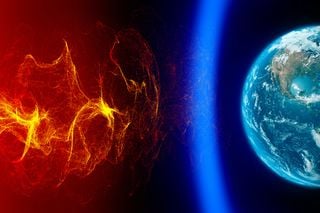
A powerful G3 geomagnetic storm has begun. Following the initial impact, three coronal mass ejections are approaching Earth, with at least two expected to make direct impact, producing spectacular auroras.

The space agency already has the technology to obtain water on Mars from ice in the soil — the real obstacle isn’t finding it, but surviving the process.
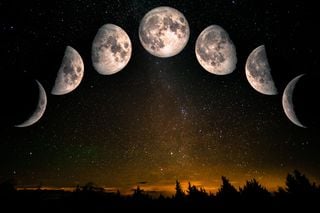
November 2025 brings us spectacular nights when you’ll be able to see the Hunter’s Supermoon, spot Uranus in opposition, and enjoy the swift Leonids alongside Cassiopeia and Andromeda.
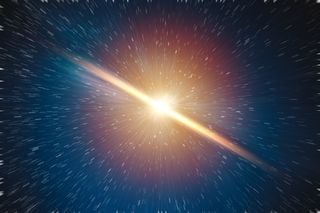
The universe could end frozen, torn apart, or stopped forever. Behind these apocalyptic scenarios lies the mysterious and elusive dark energy, responsible for accelerating cosmic expansion.