
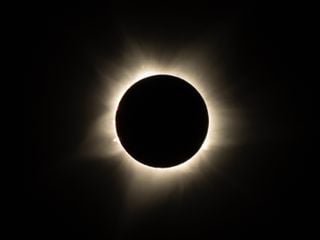
Two ambitious missions, one underway and one proposed, will help generate artificial solar eclipses from space to reveal the deepest mysteries of the Sun's corona.

Two ambitious missions, one underway and one proposed, will help generate artificial solar eclipses from space to reveal the deepest mysteries of the Sun's corona.
Scientists propose that Earth could be located within a gigantic empty region, a hypothesis that would resolve one of the greatest controversies in modern cosmology and rethink what we know about the universe.
A new study combines recent measurements with the axion dark energy model to propose that the universe will end in a Big Crunch in 20 billion years.
Asteroid Day celebrates its 10th anniversary as a global educational and scientific platform and celebrates in Luxembourg with events, lectures and art, advancing art, advancing towards the goals of planetary detection and defense.
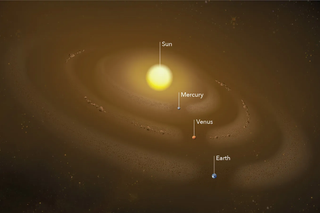
Researchers are warning about asteroids orbiting Venus, invisible to our telescopes, with recent simulations suggesting they could pose a real threat to Earth in the near future.
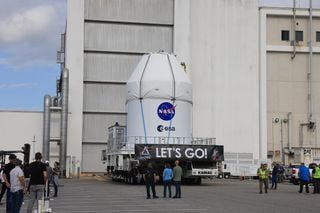
The Artemis II mission, scheduled for April 2026, will be the first crewed mission to orbit the Moon since 1972, marking a milestone in space exploration and international cooperation.

Using gravity and without the need for landing, scientists discover key structural contrasts that challenge previous theories and open up new possibilities for space exploration to understand other bodies in the Solar System.
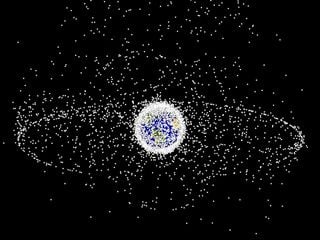
The entry angle of fireballs and space debris affects the accuracy of infrasound analysis. Understanding this geometry is vital to improving planetary defense and orbital management.
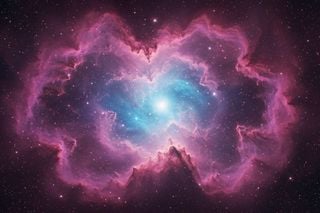
New observations from the James Webb Space Telescope have shed light on the darkness of the early Universe, showing how the first stars and galaxies emerged from the Dark Ages.
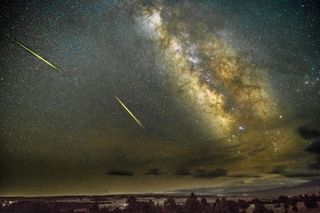
The Eta Aquariid meteor shower peaks on May 6. Associated with Halley's Comet, it promises dozens of shooting stars before dawn in dark skies.

Astronomers have discovered that super-Earths orbit not only close to their stars, but also at great distances, expanding our expectations about habitable worlds beyond the solar system.
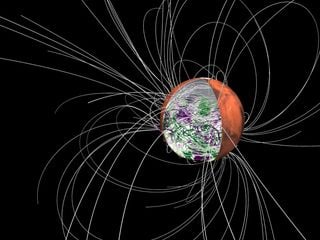
A magnetic field at the south pole of Mars has puzzled scientists. A new model with a liquid core and thermal differences offers the most convincing explanation to date.
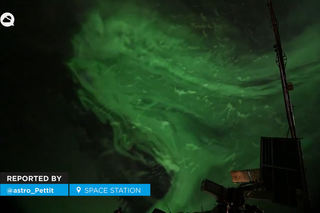
The Soyuz docking is crucial for the arrival of new astronauts and the supply of equipment for the station, and the aurora occurs at that time.
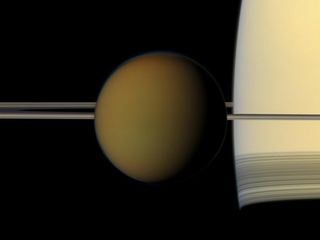
A study suggests that the moon Titan could harbor glycine-fermenting microbial life in its subsurface ocean, albeit in extremely small quantities.
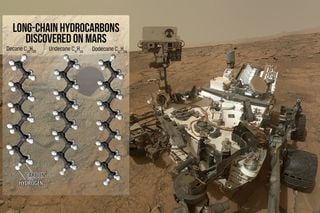
A recent discovery by the Curiosity rover has excited the scientific community, as it has identified the largest organic molecules ever detected on the red planet.
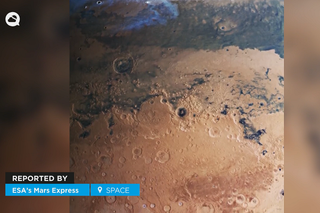
From above, the European Space Agency probe offers us a stunning view of Mars, revealing a world divided into two radically different halves.
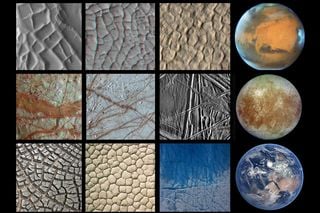
Fractures on the surfaces of Earth, Mars, and Europa follow revealing geometric patterns; studying them could provide clues to geological history and the past presence of water.
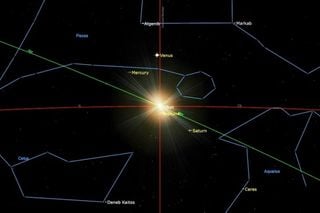
In March, major astronomical events will occur, such as the equinox, a total lunar eclipse that will be visible in America, and the disappearance of Saturn's rings.
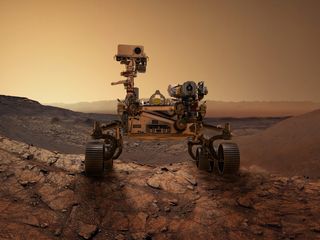
Using a laser ablation technique, NASA aims to study gypsum deposits on Mars in search of ancient bacterial life. The device aims to search for gypsum deposits that may have preserved signs of ancient life.
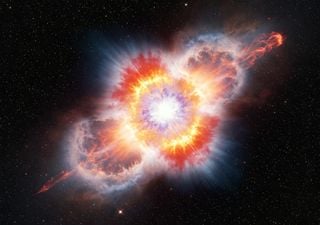
The event, dubbed XRT 200515, remained hidden for years until an innovative machine learning technique allowed it to be identified, sparking the curiosity of the astronomical community.