
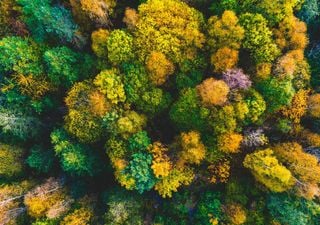
Well-established forests are having trouble adapting to rapid climate change, but what should be done to protect them?

Well-established forests are having trouble adapting to rapid climate change, but what should be done to protect them?
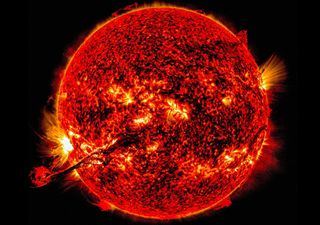
What can small-scale solar flares tell scientists about magnetic reconnection in the lower solar atmosphere?

Ambient energy such as movement and light, which is freely available in the environment, could be used to power smart buildings in the future – but how?
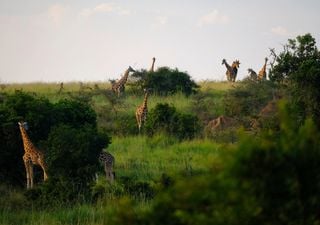
All life on Earth is organised by one rule new research finds, but what is it and what does it tell us about life and biodiversity?

A giant planet is circling a tiny star, but it simply shouldn't exist; what can it tell us about how planets form?
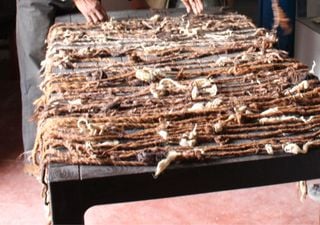
Climate change is often thought to be a relatively modern concept, but research has shown that it has been documented as far back as the Inkan Empire – in string.

A new study suggests the negative effects of the ozone hole on the carbon absorption in Southern Ocean are reversible, but only if greenhouse gas emissions decrease swiftly.

New research warns glaciers could take centuries if not millennia to recover from rising global temperatures, even if global warming is reversed.
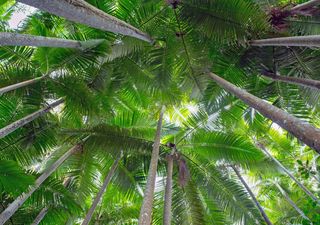
A living database of species abundance that includes data ranging from the Amazon to the Arctic offers a unique understanding into how biodiversity has changed over time.

Two new studies highlight the role of trees in city environments, not only for our health but for promoting climate resilience.
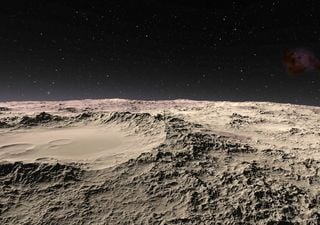
Moon dust collected during a Chinese mission will answer important questions about the formation of the Moon and early life on our planet.
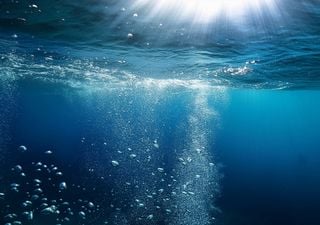
Underwater robotics and AI will help monitor marine ecosystems for early signs of change to protect the oceans and the climate.
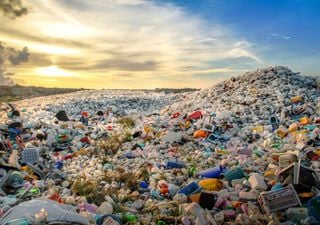
Plastic production is expected to double by 2050, but recycling rates have remained unchanged leading environmental campaigners to call recycling a ‘myth’.
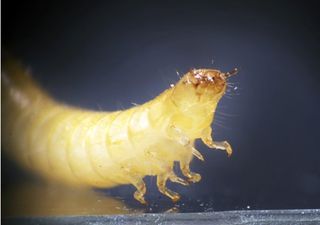
Researchers have observed the wiggling mechanism of the red flour beetle, a pest that burrows into important food crops like flour and grain; their findings could prevent infestations.
We could soon move away from the notion that PFAS are ‘forever chemicals’ after new research reveals a way to break down these persistent, synthetic chemicals.

How safe are children’s toys, and how can we better test for chemicals that might be harmful?
How much air pollution is inside your home right now? It could be more than you think!

New research has found that walking pace and step count information gathered from fitness trackers is a useful indicator of dementia risk.

Asteroseismology could offer new insight into the properties of neutron stars and nuclear matter, with important implications for physics and astronomy, health, security and energy.
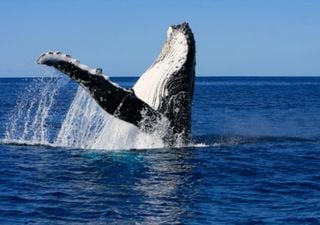
Researchers find whale song has a human language-like structure, suggesting a deep-seated commonality in communication systems.